
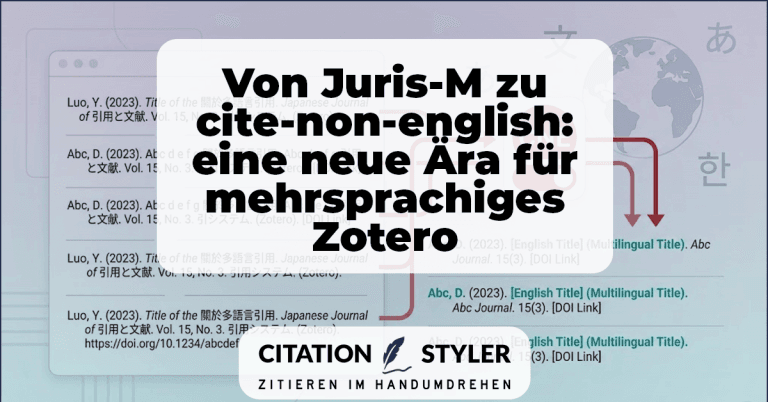
From Juris-M to cite-non-english: a new alternative for multilingual Zotero
How the cite-non-english plugin replaces Juris-M and, for the first time, enables clean multilingual citations, especially CJK citations, directly in Zotero.
How the cite-non-english plugin replaces Juris-M and, for the first time, enables clean multilingual citations, especially CJK citations, directly in Zotero.
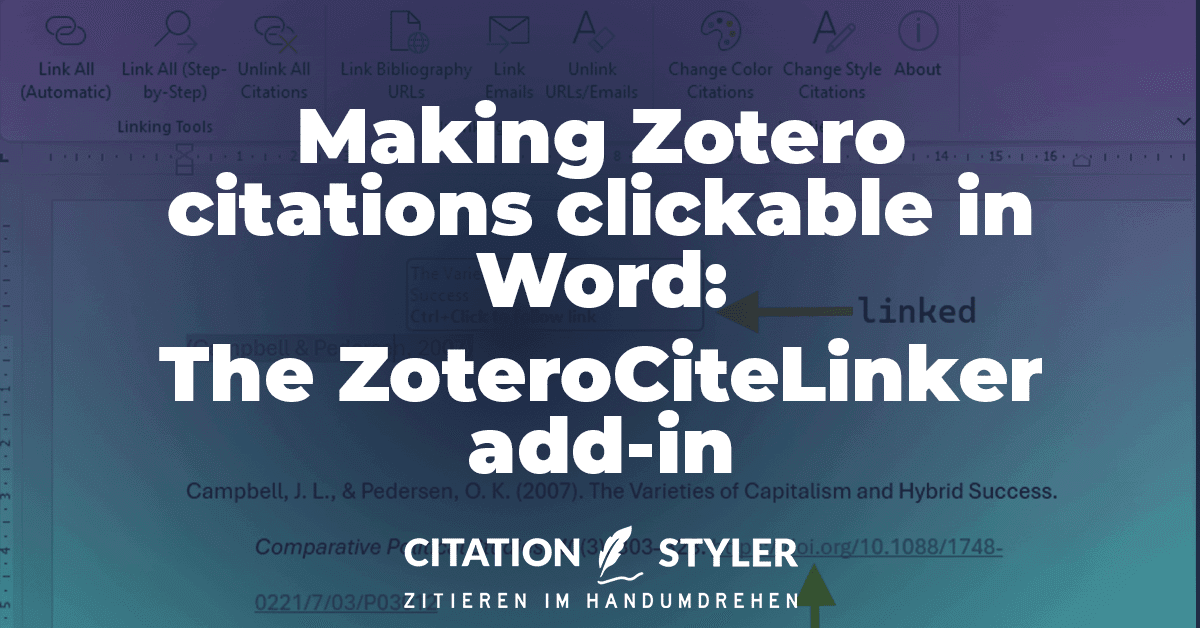
The ZoteroCiteLinker add-in makes Zotero citations in Word clickable and automatically links URLs in the bibliography. Simply via your menu bar.
AI tools such as ChatGPT are helpful, but there are specialised alternatives for scientific research. This article shows you the best AI research tools, such as OpenSciLM, Scholar Labs, Elicit, Consensus & Co., and explains which tool is suitable for which research step.
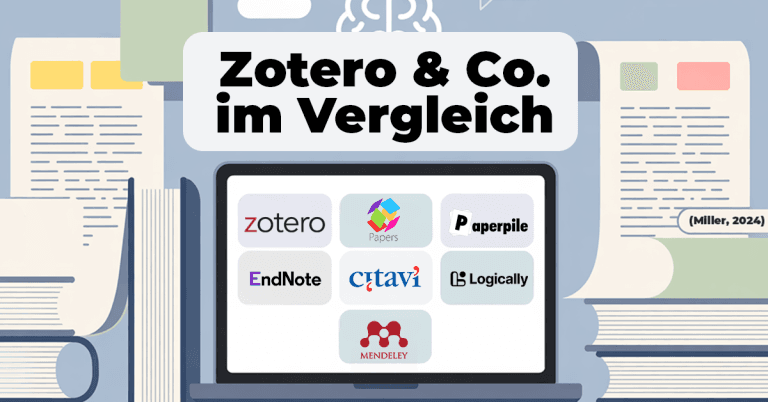
Which literature management system is right for you? Comparison of Zotero, Mendeley, Citavi, EndNote, Paperpile, Papers and Logically – including styles, support and future-proofing.

Zotero can save you a tremendous amount of time in your academic work – if you use it correctly. In this article, you will find 9 tried and tested Zotero tips from real-world experience.
Why does 2001 suddenly become 2001a? Find out why Zotero adds letters to the year and how you can solve the problem by merging entries correctly.
Literature research and citation according to German citation style done right, thanks to Zotero and CSL citation template. Here I show you how to do it.

Sometimes in Zotero, you need to add sources to your bibliography that have not been directly cited, such as the book containing a specific chapter. Here, I will show you how to do this easily.
How a non-profit organisation automated their citation workflow with Zotero - a case study
Learn how to install a custom .csl citation style in Zotero - whether received from a publisher or purchased from my shop. Step-by-step instructions including verification in Word's document preferences!
We use cookies to enable you to navigate our website efficiently and to carry out certain functions. You can find detailed information on all cookies below, under the relevant consent categories.
Cookies classified as ‘necessary’ are stored in your browser, as they are essential for the website’s basic functions.
We also use third-party cookies to help us analyse your use of this website, save your settings and provide you with content and marketing materials that are relevant to you. These cookies are only stored in your browser with your prior consent.
You can enable or disable some or all of these cookies; however, disabling some of them may affect your browsing experience.
Necessary cookies are required to enable the basic features of this site, such as providing secure log-in or adjusting your consent preferences. They are not used for advertising or to track you across other sites. The consent cookie stores a random identifier that lets us keep a record of the choice you made.